The Christian Metz model (1974) presents the exploration of the development of genre and suggested that genres pass through four phases:
1. The Experimental

2.The Classic

3.The Parody
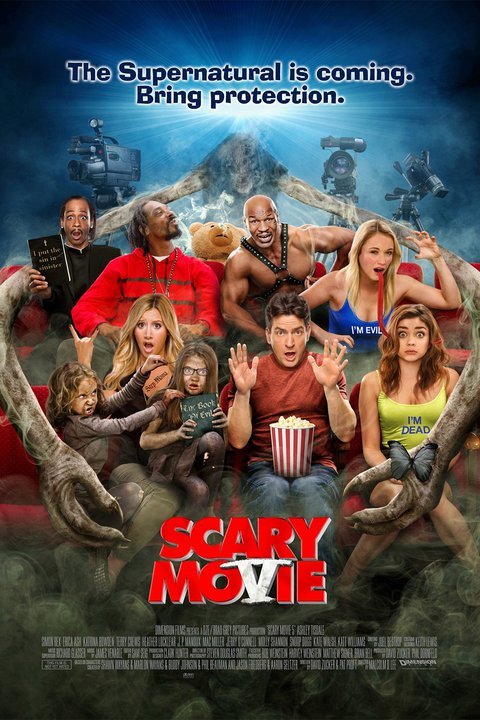 The Parody phase is where films mimic the horror genre in a comical way, which eliminates the horror codes and conventions and would have typically have been there. Films such as Scary Movie (2000) which are very successful horror parodies that have continued for 13 years as the latest one (Scary Movie 5) has recently been released in 2013 and another (Scary Movie 6) is due to be released in 2016. The film has aspects of the codes and conventions of horror films such as jump-scares and they typically have the aspects of smoke and low- key lighting, however the film then continues to make a light hearted joke about the uneasy codes and conventions. Another film that creates the humorous aspects of horror films is the film 'Carry On Screaming'(1966) which presents a family that, aren't all that normal and a detective that is sent into the woods and disappears and is not seen again.The film makes multiple jokes about this in the way that similarly to the Scary Movie characters are to make comments that are seen as humorous due to their unexpected nature as there are large forms of danger that surrounds them.
4. The Deconstruction
 The Deconstruction phase is that the films which have taken the generic elements of the horror genre and amalgamated them into varying sub genres. Films such as Se7en (1995) and The Sixth Sense (1999) which both explore different types of genres in the within their narratives, for example Se7en involves elements of Film noir and the thriller genre into its story-line and editing. The Film noir element becomes apparent through its use of detectives in it's narrative. It also creates this aspect through the use of its low-key lighting which creates the same mysterious effect that it does in Film noirs. The thriller elements that are presented in the film Se7en is due to its story-line of the protagonist going after the antagonist in order to build tension and create a climax for the audience. The movie develops these codes and conventions to create a greater effect to work well with the codes and conventions of the horror genre that the movie also involves and uses effectively to create tension and keep the audience interested in the movie. The deconstruction overall involves taking aspects away from the core genre and adding aspects of other genres into the narrative and editing of the film.

No comments:
Post a Comment